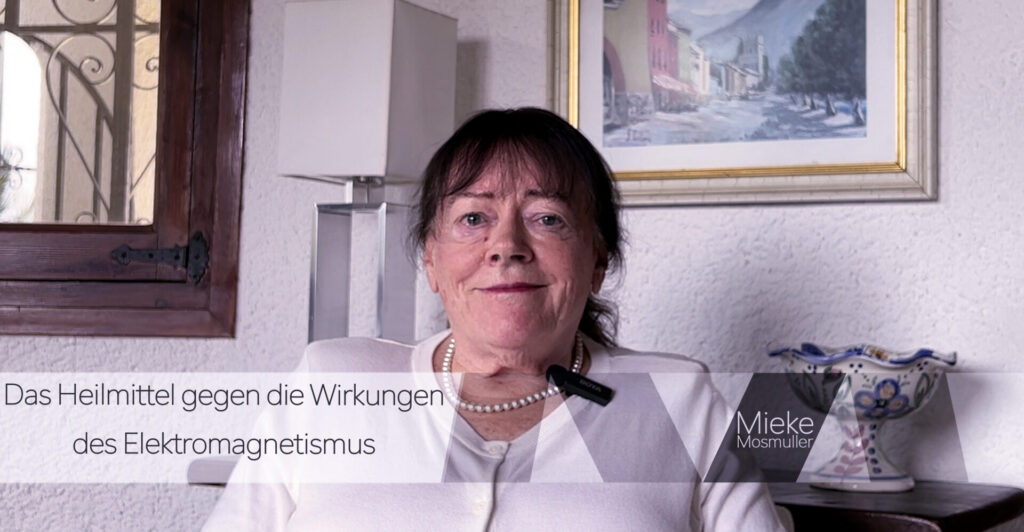
Last time I tried to say one thing and another about truth. Yes, and of course it is always only about fifteen minutes or so; I do not want to make it any longer either, because I think that is not suitable for a video on YouTube. Yes, in fifteen minutes you cannot of course say very much, and afterwards, on the basis of the reactions, and also on the basis of what I myself experience in what I have said, one thing and another is added.
And so I had to think of the well-known statement by Aristotle about truth, which says: when something is so, and you say that it is so, then that is truth. When something is so, and you do not say that it is so, then that is not truth. When something is not so, and you say that it is not so, then that is truth.
When something is not so, and you say that it is so, then that is not truth. In our time that brings a smile to our faces, because this seems to be a truth as obvious as can be. Said so simply, and yet it is of course the core of what truth is, namely agreement between that which is said, written, done, and how it is, how the facts are.
There are of course still more truths than this one, which you can formulate in a different way, but this is of course a very important one, and because of that I came upon the idea of asking myself: what does a lie detector actually do? Now, that is of course a method that is not so reliable, and therefore in that sense cannot really be used when it matters, but in itself it is of course interesting to know that your physiology, your physiological reactions, are different when you speak the truth than when you lie, and of course you can have a trained liar who may have those physiological reactions somewhat, or perhaps even completely, under control, but spontaneously it is so that when you really lie, and lying is of course something different again from not speaking the truth, but when you really lie, thus deliberately say something different from how it is, then certain functions change, and these can of course be measured, such as breathing, pulse rate, but also muscle tension and also perspiration. I did not really find EEG recording as such, but I did find those primary reactions that the body has, but the body also has these with other forms of tension, so it is of course not really reliable. And I naturally found it an interesting thought that in this way, at any rate, you cannot catch AI in a lie, because, yes, it does not have those physiological functions; there you have to do it in a different way.
And then the question is: what are we actually doing? Two days ago — it is now, when this video is being recorded, Thursday, the 17th of September — two days ago it was Prinsjesdag in the Netherlands, and yes, then the budget for the coming year is actually presented more or less by the King, and that is of course a — it is fabricated, not by the King himself, but by the ministers. And yes, when you then listen to that — I cannot listen to it for very long — I wonder what exactly happens when you listen to something like that; you get physiological reactions from that too.
But anyway, if you listen to pieces of it, then it becomes very clear that this is not about truth at all; this is about opinions, about judgements, about views, partly party-political, but partly undoubtedly also a certain ideology that comes from, well, let me say, higher authorities, such as, for example, the UN. That very clearly plays into such a, yes, into the form of the budget; you can — yes, you do not need a lie detector for that, you can perceive that directly as well. But what actually is that? It does not have very much to do with truth at all.
And when afterwards, in the Second Chamber, in Parliament, you see pieces of how people react to it, yes, there too you have to conclude: that also has nothing at all to do with truth. Nor is that the intention at all. It is something completely different that is taking place there.
And that makes it rather painful, because you would actually very much like a government — yes, the task of, let me say, representing the people and also protecting the people — you would like such a government to fulfil that task in truth. But I cannot remember ever having seen a government that really did that and therefore, in that sense, was in the truth. And also in other countries, when you see how things go there, you cannot say that it is about truth either.
So where, then, do we actually have that truth? And what kind of sense do we have for establishing that truth, when we do not want to work with a lie detector, which of course is not possible at all with AI either? Yes, then I go back to Aristotle, and when you take in such a definition of truth by him, then on the one hand you can smile at its simplicity, but on the other hand, when you say: if something is so and you say that it is so, then that is truth. It is of course a very simple formulation for saying that you are in the truth when you say or write how it is, in accordance with the facts.
And I do not believe that there is a human being who would say that this is nonsense. This formulation in itself is so clearly true. Surely there you can feel what truth is? What exactly is that? That all people say to it: yes, of course, it is evident that it is so.
I do not need to look further in books for that. I do not need to consult research. I know it directly.
When something is so and you say that it is so, then that is truth. And then there are three more such formulations with which all possibilities are covered, you might say. That feeling for truth which a human being thus has when a formulation is very simple, that does indeed exist.
It does exist in all human beings. And actually we can only say that this fundamental knowing of what is true is, in the course of life, and actually already at the beginning, more or less spoiled or coloured by all kinds of things that you have to take in through your environment, through the time in which you live, through upbringing, through education. And then you set out on a path which, certainly as a child, you do not choose, but which more or less naturally proceeds in this way, from which, of course, you reap a fruit here and not there.
So in a certain sense you do choose, but you do not do so consciously. And when you are then an adult human being, you have developed an entire programme within yourself of how you think things should be, and how you think one should strive towards that, and so on, and so on. You can then develop that further during the rest of your life, but usually it is already more or less fixed.
And when you then look at recordings of debates in Parliament, you actually see a whole group of people together, each of whom carries such a programme within themselves. They are not programmed in the way an AI assistant is, but you can nevertheless see something of that reflected there. They have formed opinions and judgements for which they fight, and there they stand.
And they go at one another, or they agree with one another, but with original truth this actually no longer has anything at all to do. You would wish that there were a way to educate children in such a way — you cannot of course avoid taking into yourself the peculiarities of your time, and taking into yourself the peculiarities of your family, and so on — but that you could otherwise educate children in such a way that they remain open beings until they have reached the years of discernment, and then no longer unconsciously accept this or that and not something else, but that they can judge with discernment. If it were still open then, yes, you would have a completely different society.
And I may say that this is what Rudolf Steiner, with Waldorf education, with Free School education, among other things had in mind: that children can be educated in such a way that they leave school as young people who can still continue to develop themselves. And not that they have been developed so far that actually nothing more is needed, they think. Then everything has become fixed, and you go through the rest of your life with it.
As you see in a football match, those football players can put all their strength into it, but they do have to keep to the rules of the game. That is what it then becomes like. Life then becomes a kind of contest in which you have your rules, partly even set by yourself, but you do not know that, and you can no longer move in any direction.
And if you then also consider that every human being is in fact an independent little universe, namely — and of course I never exclude myself — namely with an inborn conviction that you are the centre of the whole universe, which in a certain sense you also are, and that you have a talent and a capacity for insight and an emotional life which are the best there are. That is how you see the members of Parliament standing opposite one another. Everyone is, within themselves, the best there is.
And what is it actually about then? In any case, not about truth. A path of development, a path on which you practise self-education, would require that you learn to find a standpoint outside that centre of your own, so that you can look at the world from the position of an outsider, in which you attribute to yourself the same kind of values as to all others. Well, I would like to say a little more about that another time, but for the moment I wanted to leave it at that.
Truth: every human being knows exactly what it is. Only, it is clear when it is simple. When it becomes complicated, yes, then you can easily lose your way.
But I am convinced that it is possible for us as human beings to become so strong in the perception of truth that such reflections, general reflections as now take place in Parliament, become impossible by a naturally spiritual path.
And so we try, time and again, to live out of what is there and to investigate, and then above all in self-examination, what you could change in yourself, through which the whole world ultimately changes after all.