Global Warming
It is still very hot here, although the temperature has dropped by 10 degrees. Last week we had temperatures above 40 degrees here, which is unique for this region. And of course, there is a great deal of discussion about that.
Dit sprookje heeft een happy end, dat eindigt goed en het einde is werkelijk, dat de brug over de afgrond zich opgericht heeft. In het begin van het sprookje is het nog zo, dat de mens wel vanuit de hemelse wereld in de aardse kan afdalen, maar wanneer hij eenmaal in de aardse wereld met het zintuiglijke bewustzijn thuis is, ja dan kan hij met het bewustzijn eigenlijk niet zonder meer weer terug, in de slaap, na de dood, maar met het aardse bewustzijn is dat een onmogelijkheid. Aan het einde van het sprookje is er dan min of meer een vrij verkeer tussen bewustzijn van de aardse wereld en bewustzijn van de hemelse wereld.
Pure Perception
A few weeks ago I spoke about the bridge over the abyss, and afterwards there are always interesting comments. One comment said that there are actually two difficulties in the development of pure, will-permeated thinking. On the one hand, that sense perception is always also personal, therefore not pure, and on the other hand, that our surroundings present us with very many problems because we are constantly sitting in front of the screen. That is how one says it in Dutch.
Dit sprookje heeft een happy end, dat eindigt goed en het einde is werkelijk, dat de brug over de afgrond zich opgericht heeft. In het begin van het sprookje is het nog zo, dat de mens wel vanuit de hemelse wereld in de aardse kan afdalen, maar wanneer hij eenmaal in de aardse wereld met het zintuiglijke bewustzijn thuis is, ja dan kan hij met het bewustzijn eigenlijk niet zonder meer weer terug, in de slaap, na de dood, maar met het aardse bewustzijn is dat een onmogelijkheid. Aan het einde van het sprookje is er dan min of meer een vrij verkeer tussen bewustzijn van de aardse wereld en bewustzijn van de hemelse wereld.
Happiness
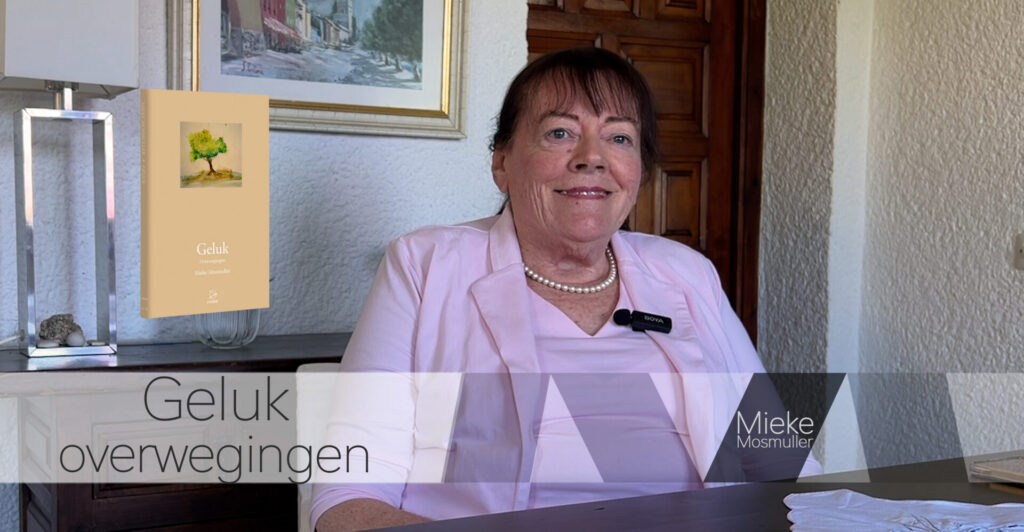
When I began reflecting on what happiness actually is, one quickly discovers that it cannot really be expressed in words, and that the word happiness also has very different meanings. I think we most often use it in the sense opposite to bad luck. I have been lucky, fortunately it turned out well—a form of chance that happens to you in a positive way is often referred to as happiness or luck.
Bridge over the Abyss
Hoe bouwen wij de brug over de afgrond tussen het zintuiglijke bewustzijn en het hemelse bewustzijn, dat is toch de grote vraag in onze tijd en er zijn natuurlijk zeer veel stromingen, spirituele stromingen, die zich daarmee bezighouden, met deze vraag en het antwoord daarop. Voor mij is het de antroposofie, die eigenlijk het zekerste antwoord daarop geeft. Maar het was reeds Johann Wolfgang von Goethe, die de hele vraag bekeken heeft en in een sprookje verteld heeft.
How do we build the bridge over the abyss between sensory consciousness and heavenly consciousness, that is indeed the great question of our time and there are of course very many movements, spiritual movements, that concern themselves with it, with this question and its answer. For me it is Anthroposophy that actually gives the most reliable answer to it. But it was already Johann Wolfgang von Goethe who looked at the whole question and told it in a fairy tale.
This fairy tale has a happy end, it ends well and the ending is truly that the bridge over the abyss has raised itself. At the beginning of the fairy tale it is still the case that the human being can indeed descend from the heavenly world into the earthly one, but once he is at home in the earthly world with sensory consciousness, then he cannot, with that consciousness, simply return again; in sleep, after death, but with earthly consciousness that is an impossibility. At the end of the fairy tale there is then more or less a free intercourse between the consciousness of the earthly world and the consciousness of the heavenly world.
A Fundamental Mistake

Yes, when one lives in this world, then one truly sees that an ever more chaotic picture is arising, a kind of insane untruth that is not only taking place in the heads and hearts of people, but that also becomes visible in facts on the world stage. One can actually no longer do anything with it. One would most prefer to withdraw somewhere on the Mookerhei into a little hut and have no newspaper and no telephone and nothing anymore, and just continue to live a little as it happens to present itself.
The Lotus Flowers and the Apocalypse

A few weeks ago a new book of mine was published, this one, “the lotus flowers and the apocalypse.” And I would like to present it today, yes, with a look at it. Normally one knows the apocalypse as the revelation of the end times. And in this sense such a book seems very актуal, because we find the word apocalypse a lot in our time, we hear it a lot, we read it a lot, because in this desolate time in which we live it has the appearance that it is an end time.
Remedy Against Decadence
Last time I said, everything always remains the same. It is of course clear that this does not concern the content, because in terms of content there are of course continuously very large differences, but the way in which the content comes into being is always the same. And then it actually makes no difference at all who performs certain actions or initiates deeds.
The source from which that arises is always the same. And of course there are differences in the sense that people have different characters and different temperaments, and therefore there is apparently indeed difference. But at the moment we are running into a trap, you could say, that is not seen at all.
De bron waaruit dat voortkomt is toch altijd hetzelfde. En natuurlijk zijn er verschillen in de zin van dat mensen verschillende karakters hebben en verschillende temperamenten, en daardoor is er schijnbaar wel verschil. Maar we lopen op het ogenblik in een val, zou je kunnen zeggen, die helemaal niet gezien wordt.
Pure Thinking
Yes, in our time it once again becomes so clear how much the world needs anthroposophy as a cultural factor. Now of course one can say: yes, anthroposophy has actually already become known throughout the whole world and in this sense is indeed a cultural factor in many regions worldwide through Waldorf schools, through curative education institutes, and so on. But that is not what I mean. There are also very many people who are enthusiastic about the work of Rudolf Steiner and who take up the content with great energy and even pass it on again, write about it, expand the content themselves, and so on. That is not what I mean either.
Everything always remains the same

Yes, after some time I once again gathered the courage to sit down here and put a thing or two into words. When you follow politics—and by that I do not mean only in the Netherlands, but in the world—then your courage can very easily sink into your shoes. What you see is that, in essence, it always remains the same.
Christmas: The Holy Nights

Today is the fourth Sunday of Advent, and I would like to try to say something about Advent and about Christmas, and also about the time directly following it. I looked back at what I had recorded a year ago. In fact, one could say: you could simply repeat it. For exactly the same thing is happening as last year. That video then bore the title Christmas, Peace on Earth. And it was meant as a counterweight to the message we had received that we should prepare ourselves for a war and that we would have to take all kinds of measures in order to be properly prepared for it. Within four or five years it would come to that. And furthermore, of course, spending on defence would have to increase. That was essentially the message.