The Angels in the Life Body

A few weeks ago, I had begun speaking about a first possible scenario that we could imagine in order to offer a counterbalance, possibly, to all the other scenarios that exist. And at that time, I read aloud a passage from a lecture by Rudolf Steiner. He says that it is truly time that the human being in his time, and then all the more so in ours, realises that the sensory reality is not the whole reality, and that we must become aware that a spiritual reality lies at the foundation, we might say, forming the sensory reality, and that one could learn to know this reality — this spiritual reality — by studying spiritual science. That is of the greatest importance in our time, and that should actually be the first scenario: that one imagines a world in which people at least in large numbers no longer stand still at what the material has to offer but are also truly permeated by the fact that there is a spiritual reality.
Initiation
In the previous videos about anthroposophy, I have tried to explain something about the threefold and fourfold nature of the human being, about karma and reincarnation, and the last time about heart thinking. And today I would like to try to say something about the path of initiation that Rudolf Steiner has shown us.
It is clear that he found – and probably every initiate will find that– that one must first study. And that shows itself in the fact that, in the books about spiritual science, for example the books “Theosophy” and also “An Outline of Esoteric Science”, Rudolf Steiner first gives study material in them, and only at the very end describes the path of initiation.
Screen Children – Raising children in the age from 7-14 years
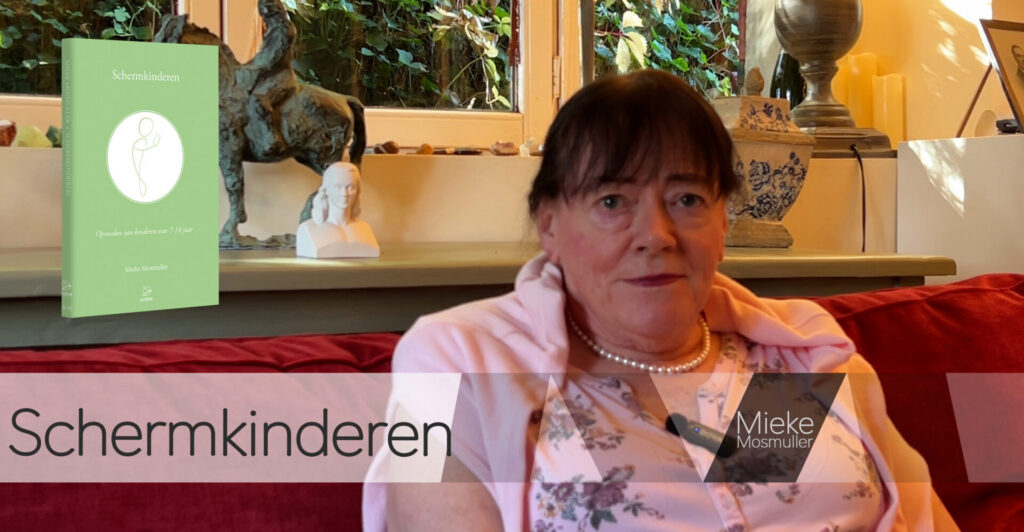
Years ago, I wrote a little book about the upbringing of the child, from birth, or perhaps even from conception, up to the seventh year of life, up to the change of teeth. I found in the poet Novalis a sentence that more or less expresses what I wanted to say in that little book, namely: The child is love that has become visible. Beautiful! So I gave that little book this title. That was years ago, and of course the question has often come up: Can you not also write something about the child in the second stage of development, namely from the change of teeth up to puberty? I have now tried to do that, and what I always “do” when I begin writing a text is that I actually first think about: what is now really the core of what I want to say, what I think is important.
Michael

Michael. We are living toward the feast of Michael on the 29th of September. And I must say that before I got to know anthroposophy, I did not know this feast. I mainly got to know it at the Waldorf school, because the children went there. And of course also from the work of Rudolf Steiner. It might occur to you that Rudolf Steiner himself initiated this feast, but that is absolutely not the case. It is a very well-known feast, which is actually celebrated across a very large range of religions. Also really on the 29th of September.
Heart Thinking

In anthroposophy we have a kind of confusion with regard to thinking. Thinking in our time is of course entirely abstract, and we can sometimes also have the feeling that it is also heartless. And that leads to us feeling a longing to get beyond thinking to something that is again filled with the heart. Or perhaps without noticing it, that we do not get beyond it, but that we slip back into something that belongs to the past. And that is what I would like to try to make somewhat clearer today. Anthroposophy is a path of knowledge, and one comes to know with the help of thinking. And that is, I believe, also something that does not make anthroposophy so popular, that we must apply our thinking strongly for it.
The Angels in the Soul

A number of weeks ago I made a proposal that we, as people who have different views on how the world should develop in the future, on the world and on humanity, that we, as such people, should become concrete in our thoughts. Perhaps we could also write down how we would then imagine it. Then I was asked to become somewhat more concrete myself about this, and immediately I knew what is the most important thing from a spiritual point of view. The most important thing is that we, as human beings, increasingly realize that what happens with the world, that world development and the development of humanity, is not only a physically visible, experienceable event, but that it is also a spiritual event. And that is of course something that is not at all clear to very many people, but to very many people it is. And we could bring much more into consciousness that what we see happening in the world, we do not only take it as it presents itself to us at first as visible and audible, but that we also try to view it from a spiritual standpoint. And then of course you can say: well yes, I cannot do that at all, because I do not concretely perceive the spiritual aspect of world events. Well, that is not necessary either, but what we can do is to immerse ourselves in the spiritual science that already exists. And that is anthroposophy. Rudolf Steiner in his time took great pains to provide a spiritual vision of the world events of that period. And that is still extraordinarily instructive.
World Memory
At the beginning of the chapter *Reincarnation and Karma* in the book ‘Theosophy’ by Rudolf Steiner, he posed for us the question whether it could not be that the great world also has a capacity for memory, just as we also have it in the small. When we perceive something or experience something, all the events of life, they imprint themselves on memory, and we are able, within certain limits, we are able to form these representations anew from memory. And Rudolf Steiner then poses the question whether the world does not also have a memory and that this world remembers what we have done to the world, whether that is positive or negative, everything we do to the world might perhaps be remembered by the world. That is, of course, immediately nonsense if one looks at the world only materially, then that is not possible at all. Such a question applies only to people who have the sense for occupying themselves with the soul-spiritual of the world. So, the question is put to us. And now, at the end of the chapter, this question returns. While reading the chapter, one often has the feeling: will this question still come to an answer?
The Pied Piper
Now, the last time I spoke about a first scenario and read a piece from a lecture by Rudolf Steiner, in which he emphasized that when people follow the outer events purely outwardly and also combine them outwardly with the intellect, there will be no end to the chaos and the wars in the world. And that it is necessary that humanity, we, come so far that we develop a skill not only to remain standing at that which the senses and the intellect have to offer us, but that we develop a capacity to become aware of the spiritual therein. Well, that is of course something – I assume that most people who watch these videos, listen, have already accepted the spiritual aspect, that there exists not a belief, but a knowledge that you live in a world and that as a human being you are a human being who is not as the senses and the intellect alone show, but that there is a spiritual reality that reveals itself in it.
The Talents as Testimony of Individuality

In the previous video I tried, on the basis of Rudolf Steiner’s Theosophy, to indicate how the soul, as the middle member between body and spirit, descends downward, to the body, as the sentient soul permeates, penetrates the astral body, and how from above the spiritual, in the form of the spirit-self, radiates through the consciousness soul with the true and the good, and the beautiful is then a consequence. Rudolf Steiner then continues the train of thought, and of course one question remains: when we stand in life in this way, and we have our own being-human and we also have the being-human of others — how then do we distinguish between certain dispositions that someone has, which come from hereditary disposition, and the purely spiritual dispositions? And in the next section of the text Rudolf Steiner elaborates on this.
A First Scenario

Thoughts have no power, I said last time. And I tried to nuance that by saying that they can have power. And I really like that there are such nuanced responses to that, not only on YouTube, but also in the form of emails, that gives the courage to continue with this theme. One of the questions was: Isn’t there a text we could do or read together, through which we could jointly move toward a positive scenario, not a war scenario, but a positive world scenario. And I immediately know which quote from the work of Rudolf Steiner I would like to take for that. And so I took it. I will read it aloud in a moment. But before that I want to say something else, which is of course related to it. And that is that it would be important for us as human beings to reflect much more on the, let me say, spiritual part in us. We differ from the animal.